
Storage and shelf life of freeze-dried peptides
Stored freeze-dried, peptides stay stable for a long time. Cool, dry and dark is the rule of thumb; refrigerated once dissolved.
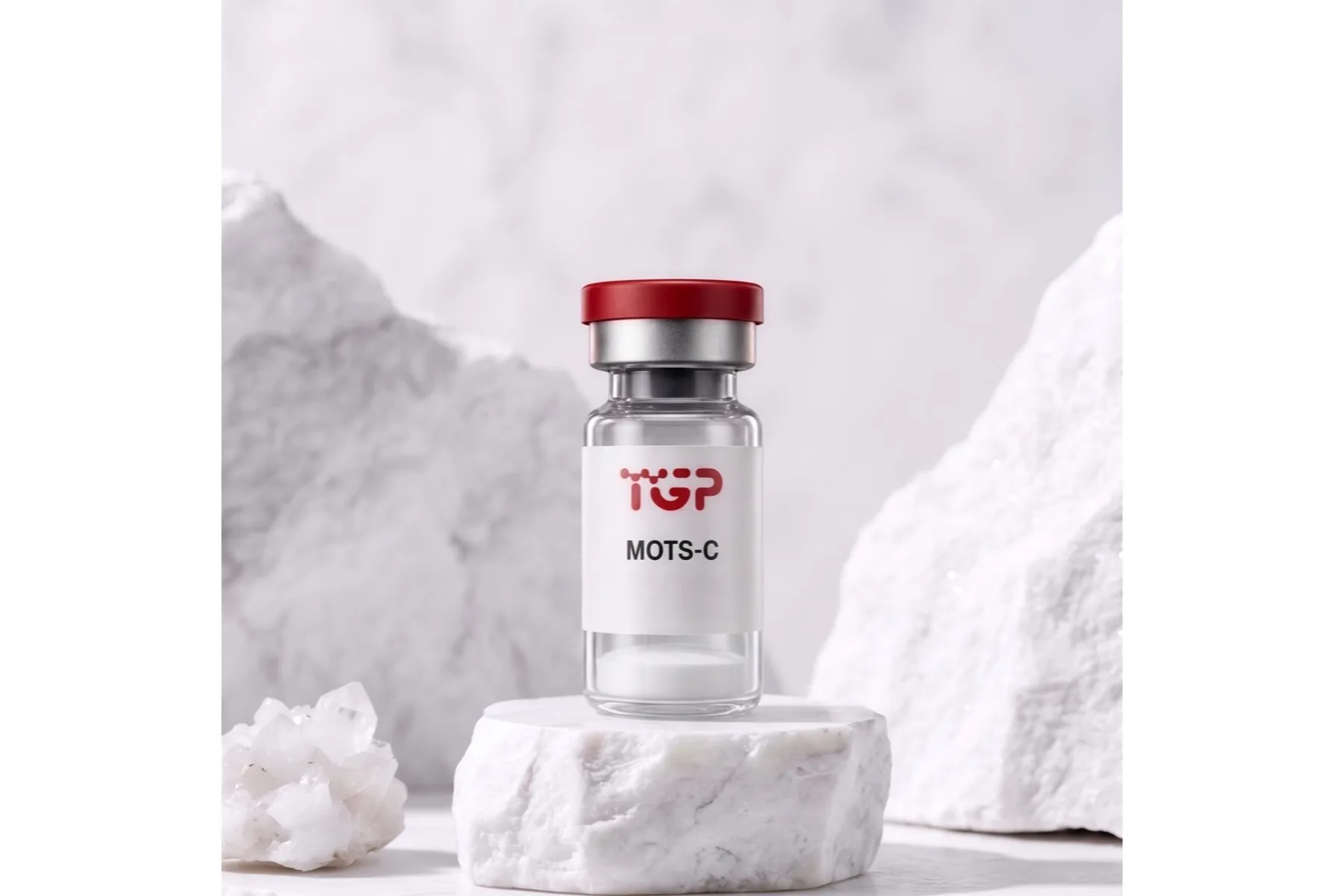
Freeze-dried peptides are stored unopened briefly cool at 2–8 °C and longer term at −20 °C (laboratories sometimes use −80 °C), kept dry and shielded from light, while a stock solution for in-vitro analysis is typically kept at 2–8 °C and used within a limited window. These two storage regimes form the basis of correct material handling in a research setting.
Unopened powder versus stock solution
A freeze-dried peptide in its original, sealed vial is most stable when stored at −20 °C; for longer-term storage, laboratories often opt for −80 °C. Once the peptide has been brought into a solvent for a laboratory analysis (for example water, dilute acetic acid, or DMSO, depending on the hydrophobicity of the sequence), the stability dynamics change entirely: the solution is kept at 2–8 °C and used over a shorter timeframe, since hydrolysis and other degradation pathways proceed faster in an aqueous environment than in solid form.
Effect of light and moisture
Many peptide sequences contain sensitive side chains, such as cysteine, methionine, tryptophan, and tyrosine, which are susceptible to oxidation or photodegradation upon exposure to (UV) light. Moisture promotes hydrolysis of peptide bonds and can cause the freeze-dried powder to clump, complicating dissolution for analysis and affecting solution homogeneity. For this reason, freeze-dried peptides are stored:
- in amber or light-blocking glass, or in outer packaging that excludes light
- with a desiccant included in the packaging
- in a sealed vial to keep out ambient humidity
- in a dark freezer or refrigerator, not on the laboratory bench
Why freeze-dried material is more stable
Freeze-drying removes nearly all water from a peptide solution through sublimation under vacuum. Without free water, the reaction kinetics of hydrolysis, deamidation, and aggregation are essentially halted: the molecule is effectively locked into an amorphous or crystalline solid matrix. This explains why a freeze-dried peptide, under correct storage, can remain stable for months to years, whereas the same sequence in solution may show signs of degradation within days to weeks.
Freezing of powder and shelf-life indications
Repeated temperature cycling of the powder itself is discouraged: condensation upon removal from the freezer introduces localised moisture on the surface of the freeze-dried material. A vial should therefore be allowed to reach room temperature before opening. A certificate of analysis or technical data sheet often lists an indicative shelf-life under specified storage conditions; this is an estimate grounded in general laboratory practice, not an absolute guarantee, and applies only when the stated conditions (temperature, light, moisture) are maintained continuously.