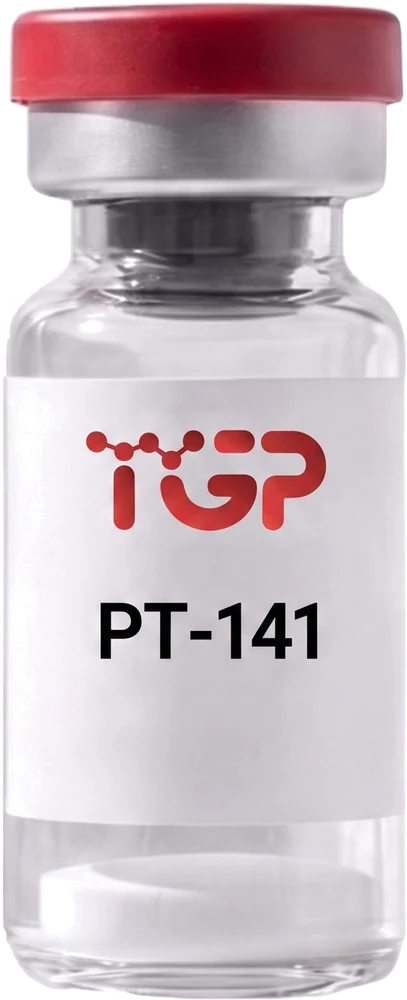
PT-141
€34.99€53.99
Today only on the entire range
02:14:33
Research only
In short
PT-141 (Bremelanotide) is a Libidopeptide; its molecular target in research is Libido · erectie. Offered strictly for laboratory research, with a certificate of analysis (CoA) per batch on request.
For laboratory and research use only. Not for human or animal consumption, diagnostics or therapeutic use.
TogoPeptide Research Team · Research & quality
Research-only. Fact-checked, no medical or dosing claims. Every batch with a CoA. CoA
PT-141 (Bremelanotide) is a synthetic peptide analog derived from the melanocortin family. In preclinical research, the compound serves as a model substance for studying melanocortin receptor pharmacology, with particular attention to MC4R-related signal transduction in cell and animal models.
Studied for libido and hormone balance
Made fresh to order
34 people are viewing this now
| Type | Libidopeptide |
|---|---|
| Form | Freeze-dried powder |
| Purity | As stated on the batch CoA |
| Certificate | Per batch, on request |
| Use | Research only |
PT-141 belongs to the class of cyclic heptapeptides and is structurally derived from alpha-MSH (alpha-melanocyte-stimulating hormone), the endogenous melanocortin peptide that served as the template for several synthetic analogs. Like Melanotan II (MT-2), the compound shares a common core structure within the melanocortin family but differs through a distinct amino acid pattern. Researchers use this structural relationship to design comparative studies between different melanocortin analogs and their receptor subtype binding profiles.
The melanocortin receptor family comprises five subtypes (MC1R through MC5R), each linked to different physiological processes in model organisms. MC1R is primarily associated with pigmentation processes, while MC4R is linked in preclinical literature to other neuroendocrine signaling pathways. PT-141 is described in research as a compound with a binding profile directed toward MC4R and MC3R alongside MC1R, making it a useful tool for distinguishing receptor-specific signal transduction from MC1R-driven processes. This differentiation is a recurring theme in comparative receptor pharmacology.
In the scientific literature, PT-141 appears across several research lines: in vitro receptor binding assays, studies of intracellular signal transduction cascades (including cAMP-mediated pathways), and neuroendocrine model systems mapping melanocortin signaling. The compound is also used in structure-activity relationship (SAR) research, where small changes in peptide sequence are linked to changes in receptor affinity. This type of research contributes to a better fundamental understanding of melanocortin-mediated cell signaling in laboratory settings.
A Certificate of Analysis (CoA) confirms identity, purity, and molecular weight of a research peptide using techniques such as HPLC and mass spectrometry. Batch consistency is essential for reproducible preclinical results, since variation in purity can affect binding assays and signal transduction measurements. Research institutions therefore routinely consult a supplier's CoA before including a peptide in an experimental design.
Related products
Certificate of analysis per batch and shipping from the EU.