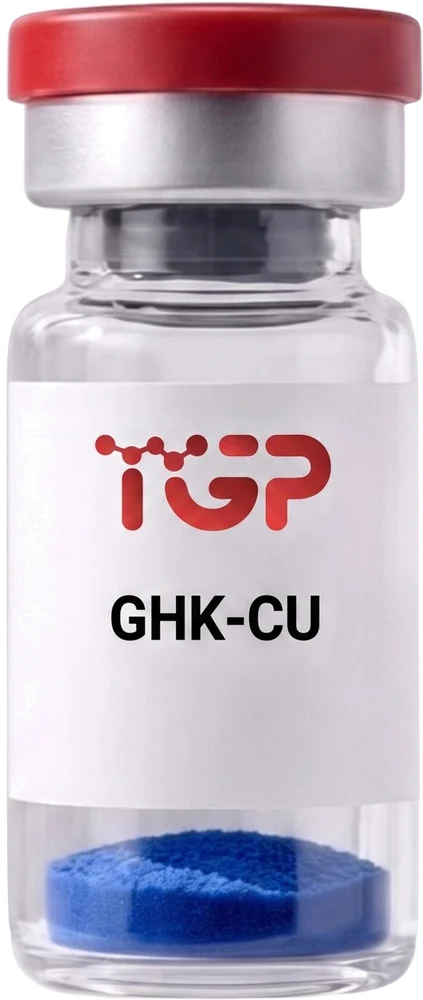
GHK-Cu
€43.99€66.99
Today only on the entire range
02:14:33
Research only
In short
GHK-Cu is a Anti-aging koperpeptide; its molecular target in research is Collageen · rimpels · haargroei. Offered strictly for laboratory research, with a certificate of analysis (CoA) per batch on request.
For laboratory and research use only. Not for human or animal consumption, diagnostics or therapeutic use.
TogoPeptide Research Team · Research & quality
Research-only. Fact-checked, no medical or dosing claims. Every batch with a CoA. CoA
GHK-Cu is a naturally occurring copper-binding tripeptide studied in laboratory settings for its interaction with skin cell culture models. The complex combines the tripeptide glycyl-L-histidyl-L-lysine with a copper(II) ion and has remained a recurring subject in in vitro matrix biology for decades.
For firmer skin, hair and nails
Only 2 left in stock
38 people are viewing this now
| Type | Anti-aging koperpeptide |
|---|---|
| Form | Freeze-dried powder |
| Purity | As stated on the batch CoA |
| Certificate | Per batch, on request |
| Use | Research only |
GHK-Cu is composed of three amino acids, glycine, L-histidine and L-lysine, forming a short peptide chain with a high affinity for copper(II) ions. The histidine side chain plays a central role in coordinating the metal ion, producing a stable tripeptide-copper complex. The complex was originally isolated from human plasma albumin fractions, forming the basis of work by biochemist Loren Pickart, who in the 1970s first described its structure and its age-related decline in plasma concentration. Since then, GHK-Cu has served laboratories as a model compound for studying copper-dependent cellular processes.
In vitro research using human skin fibroblasts describes interactions between GHK-Cu and components of the extracellular matrix (ECM), including collagen, elastin and glycosaminoglycans. Cell culture studies report changes in the expression of matrix metalloproteinases (MMPs) and their inhibitors (TIMPs), enzymes involved in the breakdown and assembly of matrix proteins. Because copper acts as a cofactor for lysyl oxidase, an enzyme that crosslinks collagen fibers, the complex is also used as a starting point for research into copper-related enzyme activity in connective tissue models. These findings originate from cell culture and tissue models and make no claims regarding application in humans.
Beyond ECM research, GHK-Cu recurs in studies of cell signaling, oxidative stress models and the regulation of inflammation-related gene expression in cultured cells. Researchers also use the complex within in vitro wound-model research, where cell migration and tissue reorganization are observed under culture conditions. Analytical research into cellular copper transport and homeostasis is another area, where GHK-Cu serves as a reference compound for studying copper-binding proteins. All such applications remain strictly confined to laboratory and preclinical research settings.
Reproducible research results depend on a certificate of analysis (CoA). A CoA confirms peptide purity, copper content and the absence of undesirable residues such as solvents or heavy metals above accepted thresholds. Variation in copper-binding ratio or peptide purity between batches can affect cell culture experiment outcomes, underscoring the importance of analytical verification through HPLC and mass spectrometry for any research material labeled as GHK-Cu.
Related products
Certificate of analysis per batch and shipping from the EU.