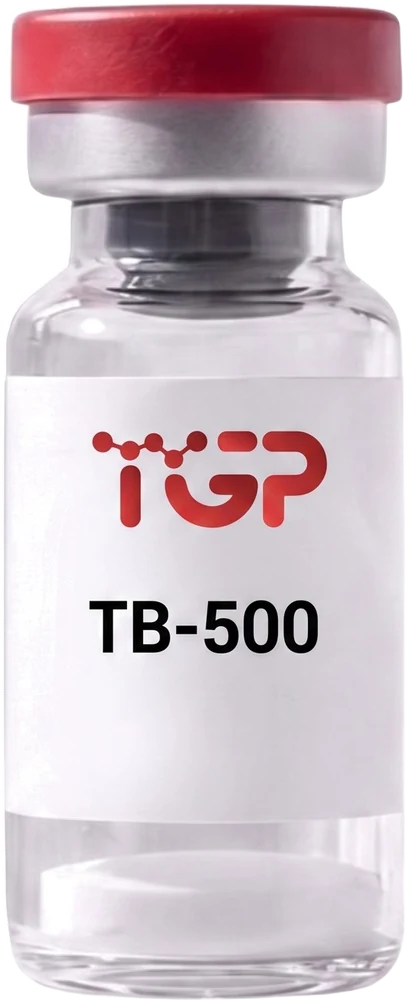
TB-500
€52.99€80.99
Today only on the entire range
02:14:33
Research only
In short
TB-500 is a Herstelpeptide; its molecular target in research is Spieren · pezen · hart. Offered strictly for laboratory research, with a certificate of analysis (CoA) per batch on request.
For laboratory and research use only. Not for human or animal consumption, diagnostics or therapeutic use.
TogoPeptide Research Team · Research & quality
Research-only. Fact-checked, no medical or dosing claims. Every batch with a CoA. CoA
TB-500 is the common research name for a synthetic fragment of thymosin beta-4, a natural protein involved in regulating the actin cytoskeleton. In laboratory settings, the compound serves as a model molecule for studying actin binding, cell migration, and cytoskeletal dynamics in vitro.
Known for muscle and joint recovery
Only 4 left in stock
41 people are viewing this now
| Type | Herstelpeptide |
|---|---|
| Form | Freeze-dried powder |
| Purity | As stated on the batch CoA |
| Certificate | Per batch, on request |
| Use | Research only |
Thymosin beta-4 (Tβ4) is a small, naturally occurring 43-amino-acid protein that plays a central role in organizing the actin cytoskeleton of cells. TB-500 is described in the literature as a synthetic fragment that mimics the actin-binding domain of Tβ4. Researchers use this shorter, synthetic sequence because it allows standardized comparison across experiments and isolates the molecular properties of the parent protein for focused study. This approach demonstrates how a limited amino acid segment can be sufficient to reproduce specific protein-protein interactions observed in broader Tβ4 research.
A cell's cytoskeleton is largely composed of actin filaments that are continuously assembled and disassembled, a process known as polymerization and depolymerization that governs cell shape and movement. In research models, TB-500 is studied for its interaction with G-actin, the monomeric form of actin, where it may influence the availability of actin subunits for filament formation. This interaction is often visualized in cell culture systems using fluorescence microscopy and biochemical binding assays, allowing researchers to quantify how the compound affects the cytoskeletal network.
Within the preclinical literature, the compound appears across several lines of research: fundamental cytoskeletal studies of actin dynamics, in vitro models of cell migration such as scratch assays on cell monolayers, and angiogenesis studies tracking vessel-formation processes in cell culture. These models are used exclusively within controlled laboratory environments and are directed at understanding underlying cell-biological mechanisms rather than any application beyond the laboratory.
A Certificate of Analysis (CoA) confirms the identity and purity of a research batch, typically through HPLC and mass spectrometry analysis. This is essential for reproducible experiments, since batch-to-batch purity variation can skew results in cytoskeletal or migration studies. Researchers are therefore advised to review batch-specific documentation before including a compound in an experimental design.
Related products
Certificate of analysis per batch and shipping from the EU.