
BPC-157 and TB-500 in tissue research
Two peptides often named together in preclinical tissue research. A factual description, without claims.
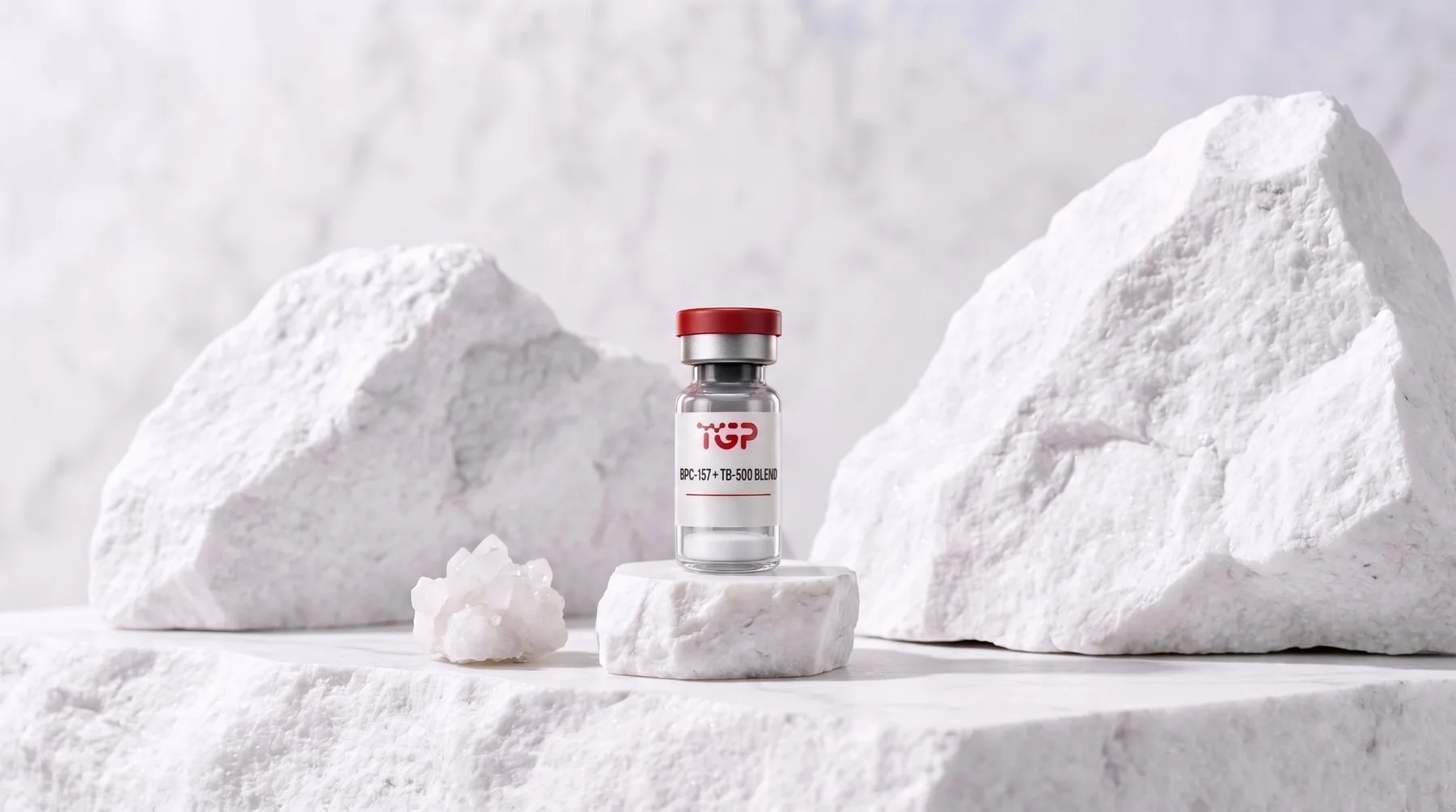
Two molecular research compounds in tissue biology
BPC-157 and TB-500 are two widely referenced synthetic peptides within preclinical research into tissue architecture and cell signalling. Both compounds are used exclusively in laboratory settings, serving as model compounds for studying specific molecular pathways.
BPC-157: a pentadecapeptide fragment
BPC-157 is a synthetic pentadecapeptide of 15 amino acids, derived from a partial sequence of a protein naturally present in gastric tissue. In preclinical research models, the compound is studied for its interaction with pathways involved in angiogenesis, including signalling through the VEGFR2 receptor and the FAK-paxillin axis that regulates cell adhesion and migration. In vitro work also examines nitric oxide related signalling in fibroblast models.
TB-500: a thymosin beta-4 fragment
TB-500 refers to a synthetic fragment corresponding to the active domain of thymosin beta-4, a 43 amino acid protein naturally present in nearly all cell types. At the molecular level, thymosin beta-4 binds G-actin, the building block of the cytoskeleton, and regulates the polymerisation of actin filaments. Research models use this fragment to study cell migration and cytoskeletal dynamics in vitro, particularly in models simulating cell movement across a tissue matrix.
Why these two peptides are studied together
BPC-157 and TB-500 recur as a pair in the research literature because they act at complementary molecular levels. One compound is studied within growth factor signalling and vascular formation, the other within actin dynamics and cell movement. Modelling both pathways together allows researchers to build a more complete picture of how tissue architecture is regulated at the cellular level. This research takes place in vitro and in animal studies within a strictly preclinical context.
- BPC-157, pentadecapeptide fragment, studied for angiogenesis related pathways such as VEGFR2 and FAK-paxillin
- TB-500, thymosin beta-4 fragment, studied for actin binding and cell migration pathways
- Both intended exclusively for laboratory and research use, not for human application
Research context, not application
All available data on BPC-157 and TB-500 originate from preclinical and in vitro research. No claims are made in this context regarding efficacy, duration of action, or use in humans. Both peptides are offered by togopeptide.com exclusively for laboratory research purposes.