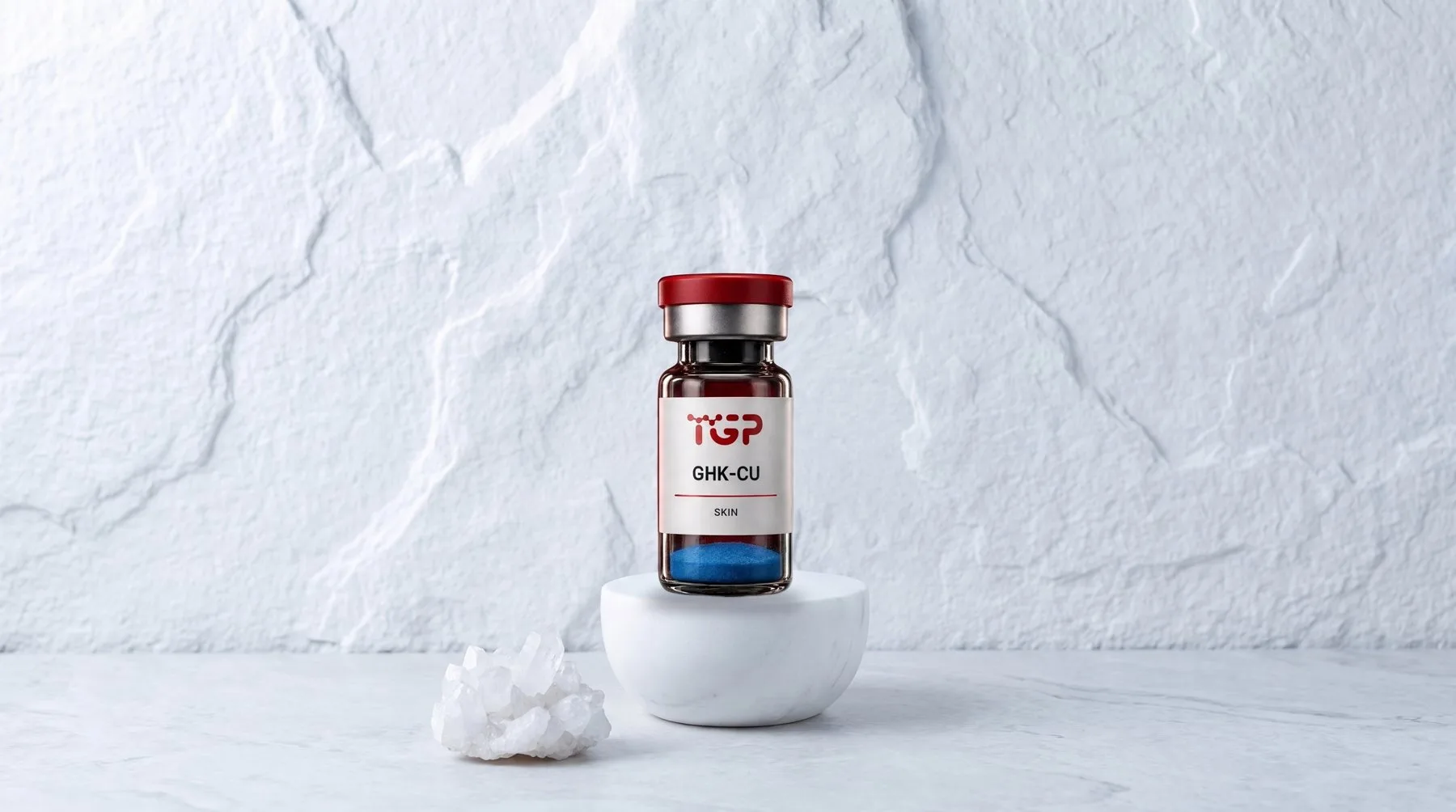
Lyophilized peptide vials look simple — a small white powder cake at the bottom of a glass vial. The reconstitution step is where research-grade rigor either holds or breaks. Wrong diluent, wrong volume, wrong handling, and the carefully-purified peptide ends up partially denatured, wrong-concentration, or microbially compromised before it ever reaches the research model.

This guide walks the methodology documented in research-handling literature for major peptide classes: which diluent matches which peptide, how to compute the volume for any target concentration, multi-puncture vial handling under refrigeration, and the storage rules that protect potency.

Research use only

This guide is for laboratory researchers handling research-grade peptides. It is not a substitute for facility-specific SOPs, not a protocol for human or veterinary use, and not a basis for self-administration of any kind.

The two main diluents — and why the choice matters

Research-handling literature for peptides documents two main reconstitution diluents:

Diluent Bacteriostatic water (BAC water) Acetic acid water (AA water)
Composition Sterile water + 0.9% benzyl alcohol Sterile water + 0.6–1% acetic acid
pH ~5 ~3
Multi-puncture stable Yes (~28 days) No (single-use)
Solubilizes hydrophobic peptides Less effective More effective
Most common use BPC-157, TB-500, Sema, Tirz, Reta, BPC-blend, GHRPs, all common research peptides Hydrophobic peptides (Melanotan-2 sometimes, dermal/skin peptides, certain blends)

For roughly 90% of catalog research peptides, bacteriostatic water is the standard choice. The benzyl alcohol preservative inhibits microbial growth, enabling repeated puncture of the same vial across multiple research-protocol time points without microbiological compromise.

Acetic acid water is reserved for hydrophobic peptides where standard water-based diluents don’t fully dissolve the lyophilized cake. Lower pH improves solubilization for some sequences but also limits the diluent to single-use because there’s no preservative.

Sterile water vs bacteriostatic water — don’t confuse them

Common error

“Sterile water for injection” and “bacteriostatic water” look similar on a vial label and the difference is genuinely important. Sterile water has no preservative — once the vial is punctured, microbiological compromise is rapid. Bacteriostatic water contains 0.9% benzyl alcohol that inhibits microbial growth across repeated punctures.

For multi-puncture research designs (anything where you’ll access the same vial more than once), bacteriostatic water is required. Sterile water is fine for single-use research designs but compromises rapidly under repeated access.

The reconstitution math — how to compute volume from target concentration

The fundamental equation is:

Volume (mL) = Mass of peptide (mg) / Target concentration (mg/mL)

So if you have a 10 mg vial of Tirzepatide and want to reconstitute to 10 mg/mL:

  • Volume = 10 mg / 10 mg/mL = 1 mL of bacteriostatic water

For a different target concentration on the same vial:

  • 5 mg/mL → 10 mg / 5 mg/mL = 2 mL diluent
  • 2 mg/mL → 10 mg / 2 mg/mL = 5 mL diluent
  • 20 mg/mL → 10 mg / 20 mg/mL = 0.5 mL diluent (concentrated, may not fully dissolve some peptides)

For complex multi-mg vials and unusual target concentrations, the math gets messy quickly. Use the reconstitution calculator — input vial mg + target concentration, output is the diluent volume in mL.

Per-unit dosing math (for research-protocol planning)

Once reconstituted, you also need to know how much volume corresponds to a given research dose:

Volume drawn (mL) = Target dose (mg) / Concentration (mg/mL)

Or in IU (international units) for research-protocol terminology where applicable:

For an insulin syringe with 100 IU = 1 mL graduations: 1 IU = 0.01 mL = 10 µL. So if your reconstituted vial is 10 mg/mL and your research-protocol target is 0.1 mg per dose, that’s 0.01 mL = 10 µL = 1 IU on a 100-unit insulin syringe.

Insulin syringes are commonly used for research-handling because their 100-unit graduation gives ~10 µL precision — appropriate for the small volumes drawn from research peptide vials.

The actual reconstitution procedure (research-handling literature)

Standard research-handling literature for lyophilized peptides documents this sequence:

  1. Bring vial to room temperature. Take the lyophilized peptide vial out of −20°C storage and let it equilibrate to ~20°C in original packaging. Cold-vial reconstitution can cause condensation inside the vial.
  2. Sterilize the vial septum. Wipe with 70% isopropyl alcohol, allow to evaporate.
  3. Draw the calculated diluent volume into a sterile syringe. Insulin or research-grade syringes are common; needle gauge is researcher’s choice within syringe spec.
  4. Inject diluent into the vial slowly, aiming the needle at the wall of the vial — not directly onto the peptide cake. Direct impact on the cake can cause foaming, which entraps peptide in air bubbles and reduces yield.
  5. Swirl gently — never shake. Slow rotation under gravity dissolves the cake without introducing shear stress that can degrade longer peptides. Most peptides dissolve in 30 seconds to a few minutes.
  6. Inspect for full dissolution. A clear, faintly straw-tinted solution is normal. Cloudiness or undissolved particles indicate incomplete reconstitution — usually a hydrophobic peptide that needs acetic acid water, or a vial that needs more diluent volume.
  7. Label the vial with reconstitution date, diluent type, and final concentration. This is methodology hygiene — without these labels, a vial 10 days later is opaque about what’s inside.
  8. Refrigerate immediately at 2–8°C unless protocol calls for room-temperature use within minutes.

Multi-puncture handling for research protocols

BAC-water-reconstituted vials can be punctured repeatedly across the documented stability window (~28 days under refrigeration for most catalog peptides). Practical multi-puncture handling:

  • Sterilize the septum before every puncture with 70% IPA. The benzyl alcohol preservative inhibits microbial growth, but only on what enters the vial. Surface contamination at the septum is your responsibility.
  • Use a fresh syringe for every draw. Reusing syringes between punctures introduces contamination and makes volume tracking imprecise.
  • Keep the vial refrigerated at 2–8°C between accesses. Repeated room-temperature exposure across 28 days is the failure mode.
  • Track accesses with a vial card or log — date, volume drawn, residual volume, researcher initials. For long studies this is methodology rigor, not bureaucracy.

Storage windows — lyophilized vs reconstituted

State Storage temperature Stability window (typical research peptide)
Lyophilized, sealed −20°C, dark 24+ months (per COA expiry)
Lyophilized, sealed 2–8°C (short-term), dark Days to weeks (transport/handling, not long-term)
Reconstituted in BAC water 2–8°C, dark ~28 days for most peptides
Reconstituted in BAC water Room temperature Hours, not days — degradation accelerates
Reconstituted, frozen −20°C Variable — many peptides degrade across freeze-thaw, single-freeze acceptable for some

Common reconstitution errors and what they look like

  • Foaming on diluent contact — diluent injected too fast or onto the peptide cake directly. The peptide is still there but yield can drop by tens of percent if the foam was vented or wasted. Mitigate: re-orient and let the foam settle, swirl gently, document the issue.
  • Persistent cloudiness — incomplete dissolution. Hydrophobic peptide; try gentle warming to room temperature with continued slow swirl, or use acetic-acid water if the supplier indicates that diluent.
  • Solution turning yellow over days — beyond faint straw color, deep yellow indicates oxidation. Discard, re-reconstitute fresh vial, store under tighter refrigeration discipline.
  • Solution turning cloudy after days under refrigeration — microbial compromise (despite preservative) or peptide aggregation. Discard, document the lot number, possibly contact supplier.

Practical research-supply notes

  • Bacteriostatic water is sold separately — TogoPeptide ships peptide vials with optional BAC water + insulin syringe kits in the catalog under Essentials. Match diluent volume requirement to the vial sizes you’re ordering.
  • Acetic acid water is less commonly stocked. For peptides where AA water is recommended, consult the per-compound storage guide on the product page.
  • Reconstitution calculator — saves the manual math: /reconstitution-calculator.html

Closing — methodology reminder

Reconstitution is a decisive moment in research-grade peptide handling. The peptide left the synthesis lab with documented purity (per COA) and arrives at your bench in stable lyophilized form. What you do in the next ten minutes determines whether the research model receives the peptide at known concentration, in solution, free of degradation — or compromised.

Match the diluent to the peptide. Compute the volume for your target concentration before puncturing the vial. Reconstitute slowly, swirl never shake, label the vial, refrigerate immediately. The methodology is straightforward; the discipline of doing it the same way every time is what makes research data clean.

Related research-handling references:

For methodology and laboratory-handling questions, contact our research-supply team at info@togopeptide.com.

References

  1. USP <797> Pharmaceutical Compounding — Sterile Preparations. United States Pharmacopeia. Standard reference for diluent handling methodology.
  2. USP <1191> Stability Considerations in Dispensing Practice. United States Pharmacopeia. Methods reference.
  3. Manning MC, Patel K, Borchardt RT. Stability of protein pharmaceuticals. Pharm Res. 1989. PubMedPMID: 2696974
  4. Wang W. Lyophilization and development of solid protein pharmaceuticals. Int J Pharm. 2000. PubMedPMID: 10967428
  5. Carpenter JF, Pikal MJ, Chang BS, Randolph TW. Rational design of stable lyophilized protein formulations. Pharm Res. 1997. PubMedPMID: 9090713